History of Versailles: From Hunting Lodge to Historic Landmark
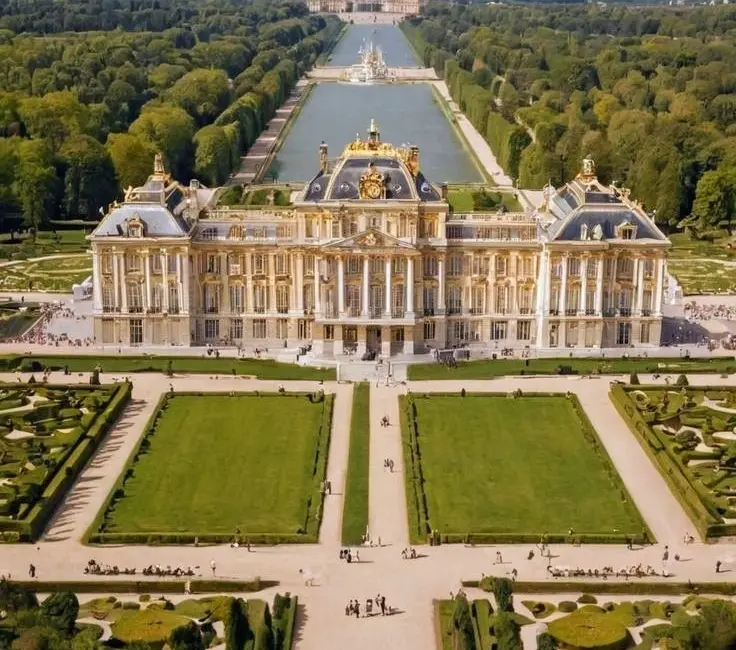
The history of Versailles is the story of how a small medieval settlement and royal hunting retreat became one of the most famous palaces in the world and a powerful symbol of French monarchy, revolution, diplomacy, and national history. Located southwest of Paris, Versailles developed gradually over several centuries. Its greatest transformation began under Louis XIII and reached its height under his son, Louis XIV, who turned the modest royal retreat into a vast palace and the political center of France. Later, Versailles witnessed the French Revolution, the end of the monarchy’s permanent residence there, the creation of a national history museum, and major international events. Today, the Palace and Park of Versailles is recognized as a UNESCO World Heritage Site and remains one of France’s most important historical monuments.
The Medieval Origins of Versailles
Versailles existed long before its famous palace was built. The settlement is documented as early as 1038, when it was a small rural community rather than an important political center. During the Middle Ages, the area developed around agricultural land, woodland, and local religious and defensive structures. Its location also made it accessible from Paris and other important places in the region.
The surrounding forests eventually attracted members of the French aristocracy because they provided excellent hunting opportunities. Hunting was an important activity for medieval and early modern nobles, and the landscape around Versailles offered abundant game. The area’s proximity to Saint-Germain-en-Laye, another important royal residence, also increased its attractiveness to the French monarchy.
For centuries, Versailles remained relatively modest. Nothing about the early settlement suggested that it would eventually become the center of French political power. Its transformation began when the future Louis XIII visited the area for hunting.
Louis XIII and the First Château
Louis XIII first visited Versailles in 1607, when he was still the Dauphin. He enjoyed hunting in the surrounding forests and returned to the area after becoming king in 1610. The location offered him something different from the formal atmosphere of larger royal residences: privacy, recreation, and access to the countryside.
During the 1620s, Louis XIII ordered the construction of a small hunting lodge at Versailles. This building was much simpler than the enormous palace that would later stand on the same site. Between 1631 and 1634, the original lodge was rebuilt and expanded into a small château made primarily of brick and stone.
Louis XIII continued acquiring land around Versailles, establishing a royal property that his son would later transform on a much larger scale. At this stage, Versailles was still primarily a hunting retreat rather than the seat of government. Nevertheless, the royal connection to the site had been firmly established.
Louis XIV Transforms Versailles
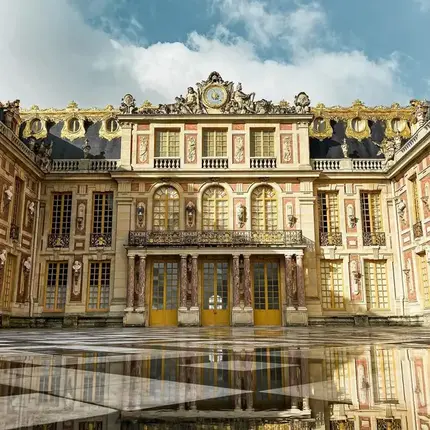
The most important stage in the history of Versailles began under Louis XIV, who became king in 1643. He had known Versailles since childhood and developed a strong personal attachment to the site. After taking greater control of government in the early 1660s, Louis XIV began an ambitious program to transform Versailles.
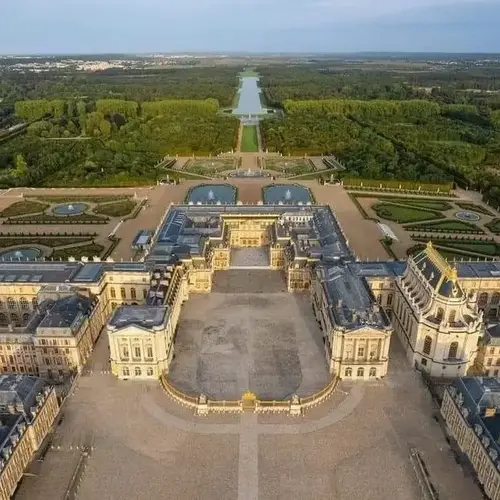
Major construction began in 1661. Instead of simply replacing his father’s château, Louis XIV and his architects expanded and surrounded the existing structure with much larger buildings. Over several decades, the palace grew into an enormous complex of apartments, ceremonial rooms, administrative spaces, chapels, gardens, fountains, and auxiliary buildings.
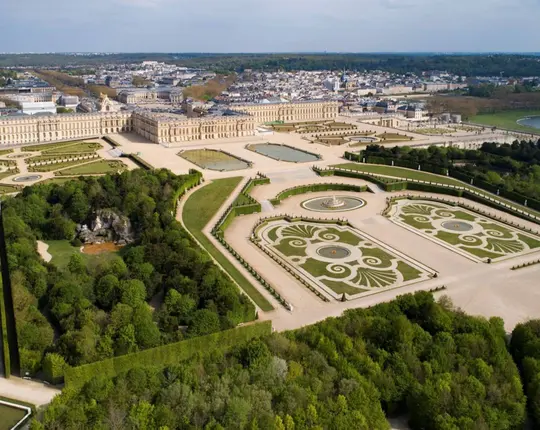
Several major figures shaped this transformation. Louis Le Vau played a central role in the architectural expansion. Charles Le Brun directed much of the palace’s artistic decoration, creating paintings and decorative programs that celebrated the power and achievements of Louis XIV. André Le Nôtre designed the famous formal gardens, using geometric patterns, long perspectives, fountains, canals, and carefully controlled vegetation.
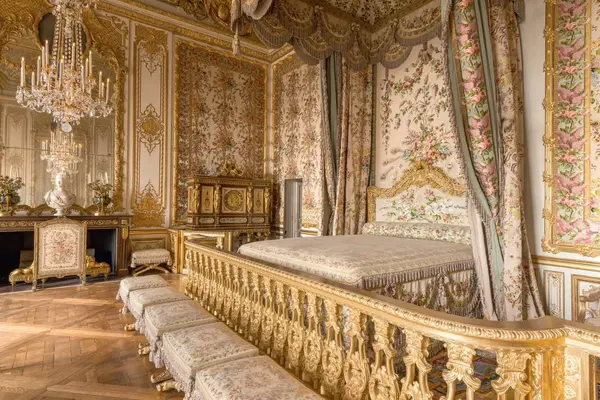
The resulting palace was not merely a luxurious residence. Its architecture and decoration were designed to communicate the authority and grandeur of the French monarchy. Versailles became a physical representation of Louis XIV’s vision of centralized royal power.
Why Louis XIV Chose Versailles
Louis XIV’s decision to develop Versailles was partly personal, but it was also deeply political. The king had experienced the Fronde, a series of rebellions against royal authority during his childhood. These events contributed to his determination to strengthen the monarchy and limit the political independence of powerful nobles.
Versailles offered Louis XIV a way to bring the aristocracy into a controlled royal environment. Instead of allowing powerful nobles to remain independent in their own territories, the king encouraged them to participate in court life. Their status and influence increasingly depended on their relationship with the monarch.
Court ceremonies became extremely important. Activities such as waking, eating, attending religious services, hunting, and receiving visitors could become formal events governed by strict etiquette. Access to the king was a valuable privilege, and nobles competed for opportunities to gain royal attention.
The palace therefore functioned as a political system as much as a residence. Its architecture, ceremonies, and social hierarchy reinforced the authority of the king.
Versailles Becomes the Center of Royal Power
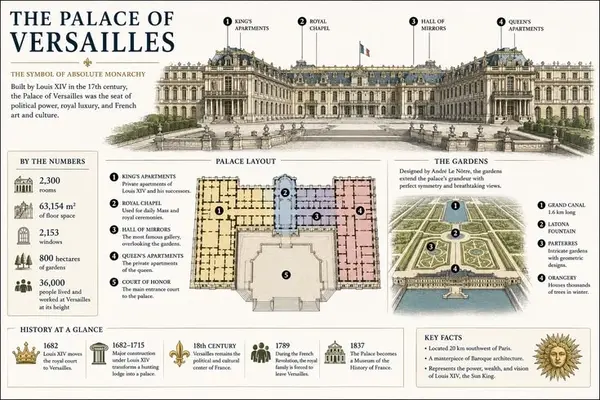
In 1682, Louis XIV officially made Versailles the principal residence of the French Court and government. This was a decisive moment in the history of the palace. Versailles was no longer simply a country retreat; it became the center of French political and social life.
The move brought ministers, aristocrats, servants, artists, diplomats, and other members of the royal household to Versailles. The surrounding town expanded as people arrived to serve the needs of the court. Versailles consequently became both a palace and a growing urban community.
Court life was highly competitive. Aristocrats sought royal favor, prestigious positions, invitations, and access to the king. The elaborate etiquette of Versailles helped establish a strict hierarchy. The palace’s grandeur reinforced the idea that the king stood at the center of French political and social life.
Louis XIV’s Versailles also became a cultural center. Music, theater, painting, sculpture, architecture, gardening, and fashion flourished under royal patronage. The palace’s influence extended far beyond France, and its architectural and garden designs became models for royal residences throughout Europe.
Versailles Under Louis XV
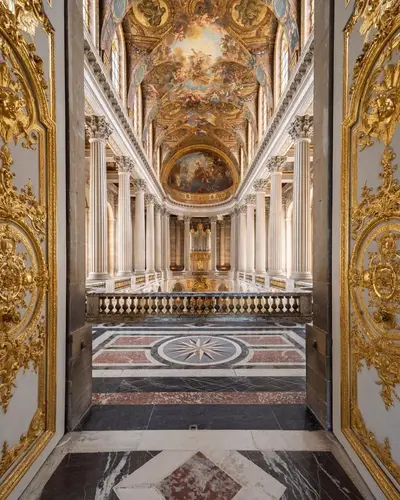
After Louis XIV died in 1715, his successor, Louis XV, continued to use Versailles as the principal center of royal life. The palace remained an important political, social, and cultural institution, although its atmosphere and artistic styles changed during the eighteenth century.
Louis XV commissioned new buildings and interiors that reflected contemporary tastes. Among the most notable additions was the Petit Trianon, designed by architect Jacques-Ange Gabriel.
Versailles continued to function as a royal residence, government center, and meeting place for the French aristocracy. However, France increasingly faced serious financial and political problems. The contrast between the elaborate royal court and the difficulties experienced by much of the population would become increasingly important during the reign of Louis XV’s successor.
Louis XVI and Marie-Antoinette
Louis XVI became king in 1774 and inherited a monarchy facing growing financial difficulties and political tensions. Versailles remained the official center of royal life, but the lifestyle of the monarchy was increasingly criticized.
Marie-Antoinette, Louis XVI’s queen, became closely associated with Versailles. She preferred greater privacy than the formal routines of the main court often allowed. The Petit Trianon became one of her favorite places within the royal estate.
Marie-Antoinette also became associated with the Hameau de la Reine, or Queen’s Hamlet, a small rural-style village created within the estate. It allowed the queen and her companions to enjoy an idealized version of country life.
Although these spaces represented only a small part of the enormous royal estate, they later became symbols of royal luxury and separation from ordinary French society. As the country’s financial and political problems intensified, Versailles increasingly represented both the grandeur and the weaknesses of the old monarchy.
Versailles and the French Revolution
The French Revolution transformed Versailles from the center of royal authority into one of the most important settings of revolutionary change.
In 1789, Louis XVI called the Estates-General at Versailles to address France’s financial and political crisis. Representatives of the clergy, nobility, and Third Estate gathered at the palace. The meeting quickly developed into a broader political struggle over representation and sovereignty.
On June 20, 1789, representatives of the Third Estate and their supporters gathered at the nearby Jeu de Paume, or Royal Tennis Court. They took the Tennis Court Oath, promising not to separate until France had established a constitution.
This event demonstrated the growing challenge to absolute monarchy. Versailles, once the physical symbol of royal power, had become a setting where representatives of the nation challenged that power.
The revolutionary crisis reached another decisive moment in October. On October 5 and 6, 1789, thousands of people, including many women from Paris, marched to Versailles. They demanded action over food shortages and political issues. The royal family eventually left Versailles for Paris.
On October 6, Louis XVI, Marie-Antoinette, and their family departed the palace for the Tuileries Palace. Versailles never again became the permanent residence of the French monarchy.
Versailles After the Monarchy
The French Revolution ended Versailles’s role as the principal royal residence, but it did not destroy the palace. Some furniture and objects were removed or sold, and parts of the estate suffered damage or neglect. However, the buildings survived and were eventually given a new purpose.
During the nineteenth century, Versailles became increasingly associated with French national history rather than monarchy alone. Under King Louis-Philippe, who became king in 1830, the palace was transformed into the Museum of the History of France.
The museum officially opened in 1837. Rooms were adapted to display paintings and sculptures representing major people and events in French history. This transformation gave Versailles a new identity. A building once created to glorify French kings was now being used to tell the story of France as a nation.
Versailles and Modern History
Versailles continued to play a role in French and international political history after the monarchy. Its enormous ceremonial rooms remained suitable for major political gatherings, and its historical symbolism made it an important location for national events.
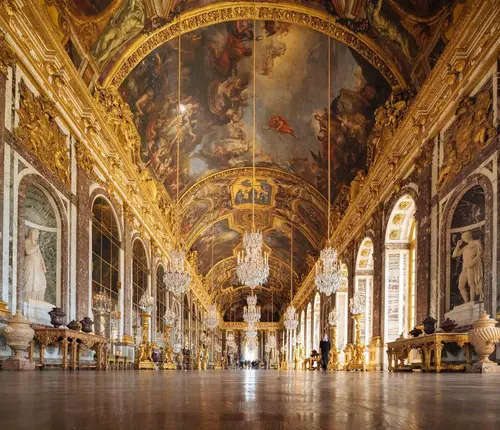
One of the most significant modern events occurred in 1919, when the Treaty of Versailles was signed in the palace’s famous Hall of Mirrors following World War I. The treaty formally established peace terms between Germany and the Allied powers.
The location was highly symbolic. The Hall of Mirrors had been created during the reign of Louis XIV to celebrate French royal power. Centuries later, it became the setting for an international agreement following a devastating global conflict.
Versailles also became associated with the development of French republican institutions. The palace and surrounding buildings continued to serve national political purposes, demonstrating how the meaning of the site had changed from royal authority to national and international history.
Versailles as a UNESCO World Heritage Site
The Palace and Park of Versailles was designated a UNESCO World Heritage Site in 1979. UNESCO recognizes the estate for its exceptional architectural, artistic, and landscape significance.
The site includes the main palace, formal gardens, the Trianon estates, and other parts of the historic royal domain. Its importance comes from the way architecture, art, landscape design, and political history were brought together into one enormous composition.
The palace today contains approximately 2,300 rooms spread across more than 63,000 square meters. Its scale is extraordinary, but its importance is not simply a matter of size. Versailles represents the artistic ambitions of the French monarchy, the political system of the Old Regime, the dramatic events of the French Revolution, and the later transformation of royal property into national heritage.
Why the History of Versailles Matters
The history of Versailles provides an unusually clear example of how architecture can express political power. Louis XIV used the palace, gardens, ceremonies, and court culture to present the monarchy as the center of French society. Versailles demonstrated that political authority could be communicated not only through laws and armies but also through architecture, ritual, art, and controlled access.
The French Revolution gave the site an entirely different meaning. The same palace that had represented absolute monarchy became a setting for demands for constitutional government and political representation. The departure of the royal family in 1789 marked the end of Versailles as the permanent home of the French kings.
Its later history shows another transformation. Versailles became a museum, a national monument, a political venue, and an international diplomatic site. Its story therefore extends far beyond the reign of Louis XIV.
Conclusion
The history of Versailles spans nearly a thousand years, from its medieval origins to its role as one of the world’s most famous historic sites. It began as a small settlement and hunting area before becoming a royal retreat under Louis XIII. Under Louis XIV, Versailles was transformed into a monumental palace and the center of French political and court life. Louis XV and Louis XVI continued its development, while Marie-Antoinette became closely associated with the Petit Trianon and Queen’s Hamlet.
The French Revolution changed everything. The Estates-General, Tennis Court Oath, and October 1789 march connected Versailles directly with the collapse of the old monarchy. After the royal family left, Versailles was transformed into a museum and later became an important site for French and international political history.
Today, Versailles stands as a monument to several different eras at once. It represents the power of the French monarchy, the culture of the royal court, the upheaval of the Revolution, the development of modern France, and the diplomacy of the twentieth century. Its designation as a UNESCO World Heritage Site in 1979 confirms its global historical and cultural importance. For travelers eager to explore this legacy firsthand, the best way to experience its grandeur is to plan your trip and visit Versailles.
Official website of the Palace of Versailles
Frequently Asked Questions (FAQs)
1. When was Versailles first established?
The settlement of Versailles is documented as early as 1038. It remained a relatively small community until its connection with the French monarchy grew during the seventeenth century.
2. Who built the Palace of Versailles?
The palace was developed over several generations, beginning with Louis XIII’s hunting lodge and expanding dramatically under Louis XIV. Architects and artists including Louis Le Vau, Charles Le Brun, and André Le Nôtre played major roles in its development.
3. When did Versailles become the center of the French government?
Louis XIV made Versailles the principal residence of the French Court and government in 1682.
4. When did the royal family leave Versailles?
Louis XVI, Marie-Antoinette, and their family left Versailles on October 6, 1789, during the French Revolution, moving to Paris.
5. Why is Versailles famous today?
Versailles is famous for its extraordinary palace, gardens, art, royal history, connection to the French Revolution, and role in modern diplomacy. It became a UNESCO World Heritage Site in 1979 and remains one of France’s most significant cultural landmarks.
—>History and visiting the Louvre museum
—> History and Visiting Champs-Elysees avenue