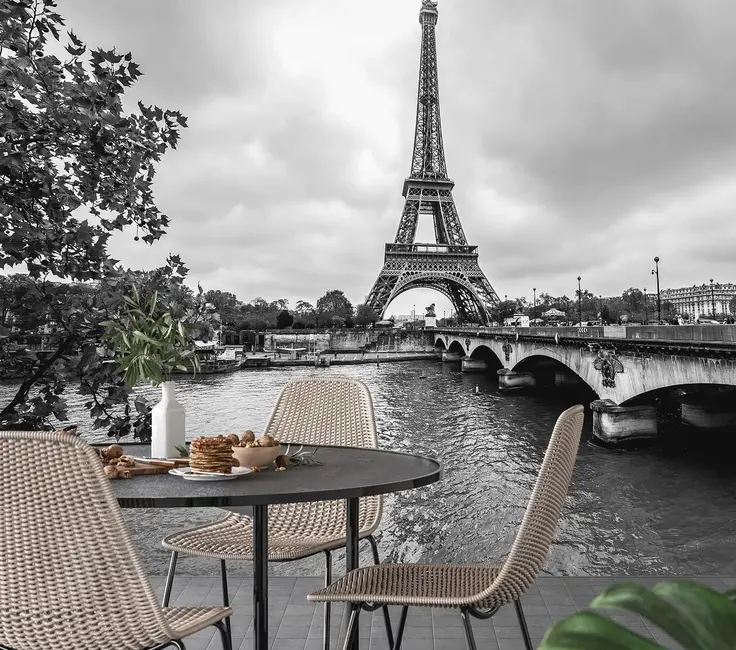
Visit the Eiffel Tower: Complete Guide to Tickets, Timing, Access, and the Best Experience
Planning to visit the Eiffel tower sounds simple until you start deciding which ticket to buy, whether the summit is worth it, how early you should arrive, and what happens if your preferred time slot sells out. The Tower welcomes more than 6.3 million visitors a year, so a little preparation can make a surprisingly big difference. The official Eiffel tower website recommends booking ahead, particularly during busy periods, while current ticket options range from second-floor stair access to summit access by elevator.
The good news is that you do not need to turn your Paris itinerary into a military operation. You simply need to understand how the visit works before you arrive. This guide takes you through the process from choosing a ticket and getting to the monument to deciding between the second floor and summit, dealing with security, finding the best viewing opportunities, and making the most of your time. Prices and operating arrangements can change, so always verify your chosen date on the official Eiffel tower website before traveling.
1. Why Visit the Eiffel Tower?
The Eiffel tower is more than a famous backdrop for Paris photographs. Once you stand beneath its enormous iron framework and look upward, the scale becomes very different from what you see in pictures. The monument offers three visitor levels and two principal destinations sold through its ticketing system: the second floor and the summit. A summit ticket also includes access to the lower visitor levels as you make your way down, giving you the opportunity to see far more than just the highest observation point.
For travelers interested not only in the views but also in the Eiffel tower history, exploring each level adds a deeper sense of context to the visit. There is also something wonderfully flexible about the experience. You can ride the elevator, climb the stairs to the second floor, or combine stairs and an elevator to reach the top. The first floor has visitor facilities, exhibitions, shopping, food and drink options, and a transparent floor that offers a very different perspective of the ground below. If you prefer an experience rather than simply checking a landmark off your list, spending time exploring each accessible level makes the Tower feel more like a journey through the monument than a quick elevator ride.
2. Where Is the Eiffel Tower?
The Eiffel tower is located at 5 Avenue Anatole France, 75007 Paris, on the Champ de Mars in the 7th arrondissement. Because it sits in central Paris, reaching it by public transportation is generally easier than driving. The official access information identifies Bir-Hakeim, Trocadéro, and École Militaire as nearby Metro options, while the Champ de Mars–Tour Eiffel station on RER Line C is also close to the monument.
Your exact route depends on where you are staying, but the neighborhood is easy to explore on foot once you arrive. Coming through Trocadéro, for example, gives you one of the classic approaches to the Tower and allows you to walk toward the monument through the gardens while enjoying changing perspectives along the way. The official site recommends public transportation and also lists bus, bicycle, car parking, and Seine transportation as alternatives. Note that transport conditions can change temporarily; for example, the official access page currently notes a closure affecting the Champ de Mars–Tour Eiffel RER station from July 15 through August 22, 2026.
3. Choose Your Eiffel Tower Ticket Before You Go
Choosing the right Eiffel tower ticket is one of the most important decisions you will make. Current official adult prices are €23.50 for second-floor access by elevator, €36.70 for summit access by elevator, €14.80 for second-floor access by stairs, and €28.00 for summit access using stairs to the second floor followed by an elevator to the summit. Reduced rates apply to eligible young visitors, children, and visitors with disabilities, while children under four require a free ticket.
The ticket you choose should reflect what you actually want from the experience. Someone who wants the classic views without spending as much may be perfectly happy on the second floor. A visitor who considers reaching the highest accessible level a once-in-a-lifetime experience will probably prefer the summit ticket. One important detail is easy to miss: the official Eiffel tower site says that if you buy a second-floor ticket, you cannot simply pay an additional amount on-site to upgrade to the summit. Choose your destination carefully before completing the purchase.
4. Buy Eiffel Tower Tickets in Advance
For most travelers, the safest strategy is to buy Eiffel tower tickets in advance through the official online ticket office. Elevator tickets can generally be booked up to 60 days ahead, while staircase e-tickets are released closer to the visit date. The official site particularly recommends advance booking from June through September and during school holidays and public holidays because these periods experience heavier demand.
Booking ahead gives you something more valuable than convenience: certainty. A timed e-ticket means you already have a scheduled visit rather than arriving in Paris and hoping that the ticket you want is still available. The summit is especially popular, and the official Eiffel tower guidance warns that peak-season summit elevator tickets can sell out quickly. The Tower also releases some availability later, so checking the official booking calendar again can be worthwhile when your first choice is unavailable.
For official availability and current prices, use the Eiffel tower official ticket office. The official site also warns visitors to be cautious with websites selling supposed standalone Eiffel tower ascent tickets; authorized resellers generally sell packages that combine admission with an additional service such as a guided experience.
5. How to Choose Between the Second Floor and Summit
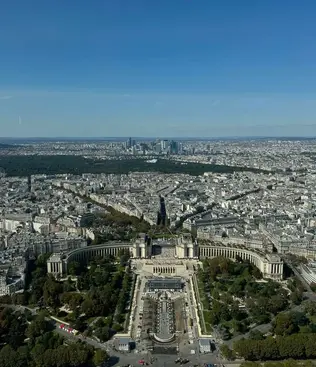
The second floor and summit offer noticeably different experiences. From the second floor, Paris feels close enough to read as a city rather than a miniature model: streets, monuments, rooftops, and the Seine form a detailed panorama. The summit takes that same perspective and pulls it dramatically farther away, giving you a higher and broader view. The official Eiffel tower explains that a summit ticket provides access to the first floor, second floor, and top, while a second-floor ticket provides access to the lower levels as you descend.
The summit is therefore not automatically “better” for everyone. If you have limited time, dislike heights, are visiting with very young children, or simply want a shorter and less expensive experience, the second floor can be an excellent choice. On the other hand, if this is your first Paris trip and reaching the summit has always been part of your dream, paying more for the highest level may be the choice you remember most. Think of it like choosing between a front-row seat and a balcony seat at a concert: both give you the experience, but from a different perspective.
6. Elevator or Stairs: Which Is Better?
The decision between the Eiffel tower elevator and stairs is really a choice between convenience and participation. The elevator is the obvious option for visitors who want to conserve energy or who have mobility considerations affecting their ability to use stairs. Elevator journeys are relatively quick, although visitors can still encounter waiting periods at different points in the ascent, particularly when demand is high. The official site recommends allowing plenty of time because security and elevator queues remain part of the overall visit.
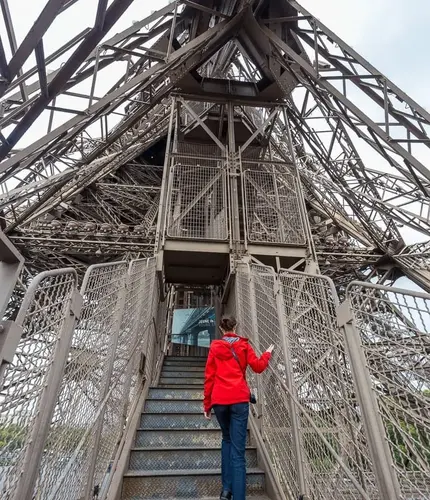
The stairs offer a completely different experience. There are 674 steps to the second floor, and the official Eiffel tower estimates roughly 30 to 45 minutes for the climb depending on fitness level. Visitors who continue to the summit do so by elevator from the second floor; the public stairway does not continue all the way to the top.
For active travelers, stairs can be one of the most memorable parts of the visit because the Tower gradually reveals itself as you climb. You see structural details that are easy to miss inside an elevator, and the changing views create a natural sense of progress. The official site says stair queues are often shorter, making them particularly useful when elevator availability is limited.
7. What Is the Best Time to Visit the Eiffel Tower?
There is no universal “perfect” time because different visitors want different things. Early morning generally offers a calmer atmosphere, while evening visits can provide illuminated Paris and the Tower’s nighttime sparkle. The official Eiffel tower recommends early opening hours and later evening periods when the monument tends to be less crowded, particularly during the summer.
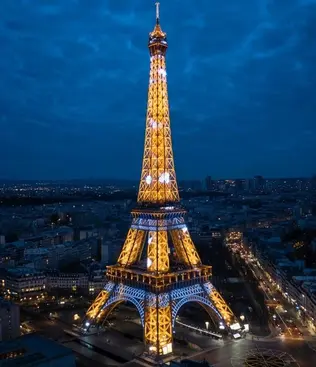
If your priority is photography, think about the kind of light you want rather than simply chasing the lowest visitor numbers. Morning provides softer light and can feel peaceful, while late afternoon can combine daylight views with the beginning of sunset. A later visit allows you to see Paris after dark and experience the Tower illuminated. The official site notes that the Tower glows golden after nightfall and sparkles every hour after dark, making an evening visit particularly atmospheric.
The current official calendar should be your final source for opening hours because schedules can vary by date and are subject to change. The site also warns that summit access can be restricted in severe weather or during exceptionally busy periods.
8. How Long Should You Spend at the Eiffel Tower?
A rushed Eiffel tower visit can leave you wondering why you spent so much time getting there. The official recommendation is to allow at least 1.5 hours for the first and second floors and approximately 2.5 hours for a visit to the summit. Your total time can be longer depending on security checks, elevator waits, photography, food, shopping, and how long you spend taking in the views.
A useful way to plan your day is to treat the Tower as a substantial attraction rather than a quick photo stop. If you have a summit ticket, keep at least a couple of hours available and avoid scheduling another time-sensitive attraction immediately afterward. If you plan to dine at the Tower, add more time because restaurant reservations operate on their own schedule. The official site currently lists Madame Brasserie on the first floor and Le Jules Verne on the second floor among the Tower’s dining experiences.
Remember that your ticket time is not necessarily the moment you walk straight into an elevator. The official visitor guidance recommends arriving early enough to complete security, and current instructions suggest allowing roughly 15 to 20 minutes for the initial security process.
9. Understand Eiffel Tower Entrances and Security
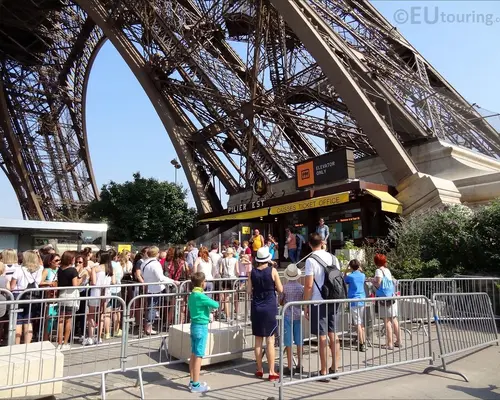
Visitors enter the Eiffel tower site through the South or East entrances, where an initial security check takes place. Once inside the gardens and esplanade, visitors follow signs and staff instructions toward the appropriate elevator or staircase queue. A second security check takes place before entering the monument’s ascent area.
Security is one reason arriving early matters. It is tempting to calculate your journey based only on Metro time and walking time, but the real visit begins before you reach the elevator. Give yourself enough buffer to find the correct entrance, pass security, and reach the pillar indicated for your ticket. A few extra minutes can be the difference between calmly joining your timed queue and starting your Paris experience with unnecessary stress.
There are also strict restrictions on baggage and prohibited items. The current visitor regulations prohibit luggage exceeding 40 × 60 cm, and the Tower has no luggage-storage or cloakroom facility. Large objects, certain tools and weapons, glass containers, excessive quantities of food and drink, and non-folding strollers are among items restricted under the current regulations.
10. How to Get to the Eiffel Tower
Public transportation is usually the most practical way to visit the Eiffel tower. The official access page lists Metro Lines 6, 8, and 9 as serving nearby stations, with Bir-Hakeim particularly close to the South entrance. Trocadéro and École Militaire are approximately 15 minutes away on foot, while RER Line C normally serves Champ de Mars–Tour Eiffel, located only a short walk from the site.
Walking is another excellent option when your itinerary allows it. Paris rewards visitors who approach the Tower slowly because the building appears differently from almost every street and open space around it. Coming from Trocadéro gives you one of the most recognizable perspectives, while approaching through Champ de Mars makes the scale of the Tower increasingly impressive as you get closer.
Driving is possible, but it is generally less convenient than public transportation. The official Eiffel tower site recommends nearby paid parking facilities rather than relying on street parking. You can also reach the area by bus or by boat along the Seine, creating an opportunity to turn the journey itself into part of your sightseeing experience.
11. What to See on Each Level
Each visitor level has its own character, so do not make the mistake of treating the summit as the only part worth seeing. The first floor provides interactive and cultural experiences as well as a transparent floor, shops, and food and drink opportunities. It is particularly useful for families because there are visitor activities that make the space more than simply another observation deck.
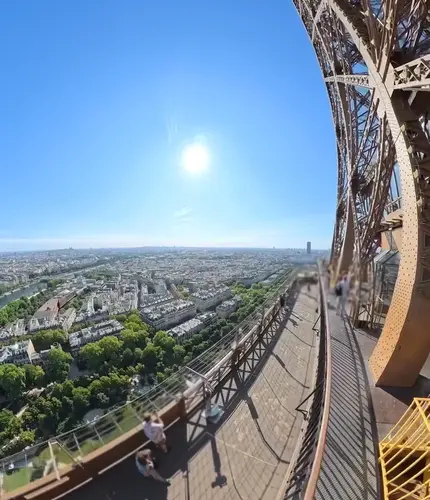
The second floor is where the city begins to spread out dramatically. It is high enough to deliver impressive panoramic views while retaining plenty of visual detail. You can identify many Paris landmarks and appreciate how the streets, river, and neighborhoods fit together. For travelers who want an excellent view without going all the way to the summit, this level is often a very satisfying compromise.
The summit provides the highest visitor viewpoint. Reaching it requires an additional elevator journey from the second floor, so summit-ticket holders should expect another stage in their visit. Weather can affect summit availability, and the official site notes that access may be restricted under severe conditions.
12. Eiffel Tower Photography Tips
The best Eiffel tower photographs are rarely produced by simply standing directly underneath it and pointing a phone upward. Paris gives you countless opportunities to change perspective, distance, height, and background. Trocadéro is particularly popular for wide compositions, while Champ de Mars can provide a more symmetrical relationship between the Tower and the surrounding landscape.
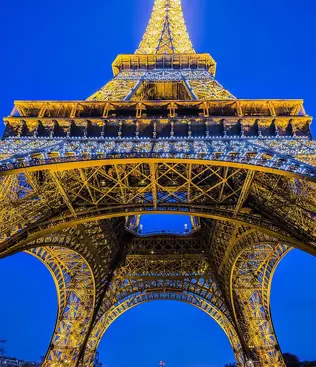
Inside the Tower, photographs become more about structure and atmosphere. The iron lattice creates natural frames, repeating patterns, and unusual perspectives that look very different from the traditional postcard image. On the upper levels, panoramic photographs benefit from taking a moment to identify a clear subject rather than trying to capture the entire city in every frame.
For an evening visit, keep your camera steady and allow the ambient light to do some of the work. The Tower’s illumination and Paris skyline create naturally dramatic scenes after sunset. The official site notes that the Tower sparkles every hour after dark, so checking the current evening schedule and allowing enough time at a suitable viewpoint can help you experience that moment rather than watching it from a Metro platform.
13. Dining at the Eiffel Tower
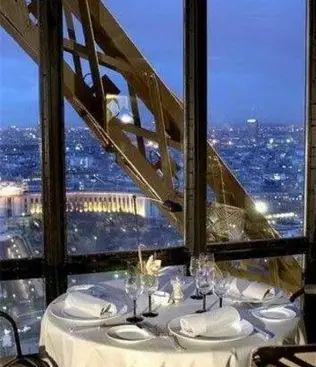
For some visitors, seeing Paris from above is enough. For others, combining the view with a meal makes the experience feel more special. The Eiffel tower currently lists Madame Brasserie on the first floor and Le Jules Verne on the second floor, giving visitors different dining experiences within the monument.
Restaurant planning should be treated separately from your general sightseeing schedule. A meal reservation has its own timing requirements, and the official Eiffel tower guidance recommends planning your tower admission around the restaurant reservation rather than assuming you can fit everything together at the last minute. The official ticketing platform also offers certain admission-and-dining combinations, which can simplify planning for visitors who already know they want both experiences.
A meal is not essential to enjoy the tower, though. Paris has excellent cafés and restaurants throughout the surrounding neighborhoods, and some travelers prefer to keep the Tower visit focused on the monument itself. Choose dining on the Tower because you value the specific experience, not because you think it is required to make your visit worthwhile.
14. Visiting the Eiffel Tower With Children
Children can have a fantastic time at the Eiffel tower, but the key is matching the ticket and ascent method to your family’s energy level. Young travelers may find the stairs exciting at first and exhausting later, while toddlers and babies can make a long staircase climb considerably more complicated. The official guidance specifically recommends that families with very young children consider elevator access rather than relying on stairs.
Children under four currently receive free admission, although they still require a ticket. Folding strollers are accepted, but non-folding strollers are not, and the Tower does not provide ordinary luggage storage. Families should therefore arrive with only what they genuinely need for the visit and make arrangements for larger bags before reaching the monument.
A practical family strategy is to avoid building the entire day around the Tower. Allow time for a meal, a break, and some open space before or after the visit. Children often remember the view, the elevator ride, and the sense of adventure much more than they remember the historical facts, so give them room to experience the Tower rather than trying to turn every moment into a lesson.
15. Accessibility at the Eiffel Tower
Accessibility needs should be considered when selecting a ticket. The official site states that the lower level of the second floor and the first floor are accessible to wheelchair users, while the stairways and summit are not suitable for people with limited mobility. Reduced admission rates are available to eligible visitors with disabilities and one accompanying person, subject to the required documentation.
This makes advance planning particularly important. A visitor who requires elevator access should select the appropriate ticket rather than assuming that an apparently similar ticket provides the same route. The Tower’s design, visitor flow, and safety procedures can make some areas unsuitable for certain mobility needs, so checking the latest accessibility information directly with the monument is preferable to relying on a generic travel blog.
For a current overview, use the official Eiffel tower planning guide and the monument’s accessibility information before booking. Conditions can be updated, particularly when temporary works, crowd-control measures, or operational changes affect visitor routes.
16. Visiting the Eiffel Tower at Night
There is a good reason evening visits remain popular: the Eiffel tower changes personality after sunset. During the day, the structure dominates the skyline as a monumental piece of engineering. At night, its illumination transforms it into something more theatrical, while Paris itself becomes a field of glowing streets and landmarks.
The official Eiffel tower specifically recommends evening visits as a way to find a calmer atmosphere, with visitor numbers beginning to decline later in the night. The Tower also shines golden after nightfall and sparkles every hour after dark.
A nighttime visit can work especially well for travelers who want to combine the attraction with dinner or a Seine-side walk. Just remember that the exact experience depends on your chosen date, weather, and operating schedule. Check the official calendar rather than assuming the Tower follows the same hours every day.
17. What to Bring When You Visit the Eiffel Tower
The smartest packing strategy is surprisingly simple: bring less. You should carry your phone, ticket, identification where appropriate, payment method, water if permitted within the site’s rules, and clothing suitable for the forecast. Comfortable shoes are especially important if you plan to use the stairs or walk through the surrounding Paris neighborhoods afterward.
Large luggage is one of the biggest practical mistakes. The Tower currently has no luggage storage facility, and its visitor regulations prohibit oversized luggage. A bag exceeding the permitted dimensions may prevent entry, so travelers arriving with suitcases should arrange storage elsewhere, such as at their hotel or an appropriate luggage facility.
Weather deserves special attention. Conditions can feel noticeably different at height, and summit access can be limited in severe weather. Checking the forecast before leaving your hotel allows you to decide whether a summit visit makes sense and whether you need an extra layer. Flexibility is especially valuable for travelers spending several days in Paris.
18. What If Eiffel Tower Tickets Are Sold Out?
A sold-out online calendar does not always mean you cannot visit the Eiffel tower. The official Tower continues to sell tickets at its on-site ticket offices, subject to availability and visitor capacity. During busy periods, however, summit tickets can become unavailable, so relying entirely on walk-up admission is a gamble if reaching the top is your main goal.
The first fallback is to keep checking the official website. The Tower can release additional availability, and a different time or destination may suddenly become bookable. The second option is to consider the stairs, particularly if you are comfortable walking and the second floor would still make your visit worthwhile. The official guidance notes that stair access can sometimes offer a more practical last-minute route.
Another option is changing your expectations rather than abandoning the visit. A second-floor experience is still a genuine Eiffel tower visit with impressive panoramic views. What matters is knowing before purchase that a second-floor ticket cannot simply be upgraded to the summit later.
19. The Best Way to Plan Your Eiffel Tower Day
Think of the Eiffel tower as one major anchor in your Paris itinerary rather than an isolated stop. Book the Tower first if the visit is important to you, then arrange nearby activities around the confirmed time. This approach is particularly useful for travelers visiting during busy periods, because trying to build an entire day around an unconfirmed summit slot can create unnecessary complications.
A simple itinerary might begin with a walk through Trocadéro before the Tower visit, followed by the monument itself and then a stroll across Champ de Mars. Another option is to combine the Tower with a Seine cruise, a meal, or nearby cultural attractions. The official Eiffel tower site maintains a visitor section featuring nearby cultural sites and experiences, which can help you build a geographically sensible day.
The most important rule is to leave breathing room. Paris is not a theme park where every attraction starts exactly when you arrive at its front gate. Metro delays, security checks, photographs, coffee stops, and simply stopping to admire the view all take time. A schedule with a little flexibility usually creates a much better vacation than one packed so tightly that missing a ten-minute connection ruins the afternoon.
20. Final Tips for an Unforgettable Eiffel Tower Visit
The easiest way to visit the Eiffel tower well is to make a few decisions before the day arrives. Decide whether you want the second floor or summit, choose stairs or elevator based on your group, book through the official ticket office whenever possible, and arrive early enough to clear security without rushing. Check the official opening calendar immediately before your visit because operating hours and access arrangements can change.
Do not assume the most expensive ticket is automatically the best ticket. For some people, the summit is the highlight of their Paris trip; for others, the second floor provides exactly the view and experience they wanted at a lower price. Likewise, stairs are not merely a cheaper substitute for the elevator: they create a completely different way of experiencing the structure, although they are not appropriate for everyone.
Finally, give yourself permission to enjoy the Tower without constantly checking the clock. Look at Paris from above, examine the ironwork, watch the Seine, take a few photographs, and then put the camera away for a moment. The Eiffel tower has survived changing fashions, intense criticism, wars, and more than a century of tourism because it is more than a photograph. Your visit should feel like an experience, not just another item checked off an itinerary.
Conclusion: Make Your Eiffel Tower Visit Worth the Trip
A successful visit to the Eiffel tower starts before you arrive in Paris. The biggest decisions are straightforward: choose the level you want to see, select the right ascent method, book your ticket as early as practical, plan around security and transportation, and leave enough time to actually enjoy the monument. Current official adult admission ranges from €14.80 for second-floor stair access to €36.70 for summit access by elevator, with additional guided and dining experiences available.
For first-time visitors who have their heart set on the summit, booking early is the safest approach, especially in summer and other high-demand periods. For flexible travelers, the second floor and stairs can offer excellent alternatives, while evening visits provide a chance to see illuminated Paris and the Tower’s hourly sparkle.
Before your trip, check the official Eiffel tower ticket office and the official visitor-planning page for your exact date. With the basics handled in advance, you can spend less time worrying about logistics and more time enjoying one of Paris’s defining experiences.
FAQs About Visiting the Eiffel Tower
1. Do I need to buy Eiffel tower tickets in advance?
Advance booking is strongly recommended, particularly if you want summit access or are visiting during a busy period. Elevator tickets are generally released up to 60 days ahead, while staircase tickets become available closer to the visit date. Tickets can also be purchased on-site, subject to availability.
2. Is the Eiffel tower summit worth visiting?
For many first-time visitors, yes. The summit offers the highest visitor viewpoint and provides a broader perspective of Paris. However, the second floor is already an excellent experience and can be a better choice if you have limited time, prefer to spend less, or have mobility limitations affecting access to the summit.
3. How long does it take to visit the Eiffel tower?
The official Eiffel tower recommends allowing at least 1.5 hours for the first and second floors and around 2.5 hours for the summit. Add extra time if you expect security delays, want to eat at the Tower, or plan extensive photography.
4. Can I buy Eiffel tower tickets if the website says sold out?
You may still be able to buy tickets at the Tower’s on-site ticket offices, depending on capacity. The official site also recommends checking the online calendar again because additional availability may appear. If summit tickets are unavailable, second-floor or staircase options may provide an alternative.
5. What should I bring to the Eiffel tower?
Bring your ticket, phone, comfortable footwear, and clothing appropriate for the weather, but avoid unnecessary luggage. Large bags are not permitted, there is no luggage-storage facility, and the current visitor regulations prohibit luggage exceeding 40 × 60 cm along with various restricted items.