Visit Versailles: The Complete Guide to Planning Your Trip
If you are planning to visit Versailles, you are not simply adding another museum to your Paris itinerary. You are stepping into a vast historical estate where royal apartments, glittering mirrors, formal gardens, fountains, wooded paths, and intimate retreats come together. The Château de Versailles is only one part of the experience, and that is something many first-time visitors discover too late: Versailles is much larger than the famous palace suggests. The estate includes the Palace, Gardens, Estate of Trianon, and Queen’s Hamlet, so a well-planned visit can easily take an entire day.
The good news is that visiting Versailles does not have to be complicated. Once you understand the layout, choose the right ticket, reserve your Palace time slot, and organize your day around the opening hours, the experience becomes much easier. From Paris, the journey is also straightforward, with the RER C providing access to Versailles Château Rive Gauche. The key is to avoid treating Versailles like a quick two-hour attraction. Think of it as a huge historical neighborhood: begin with the royal world inside the Palace, explore the Gardens, continue toward Trianon, and finish with the quieter landscapes associated with Marie-Antoinette.
Why Visit Versailles?
There are many beautiful palaces in Europe, so what makes Versailles special? One answer is scale. Under Louis XIV, Versailles was transformed into a monumental royal residence and a powerful symbol of the French monarchy. Its architecture, decoration, and gardens were designed to communicate wealth, authority, order, and prestige. The famous Hall of Mirrors is the clearest example, but the story becomes even more interesting when you realize that Versailles was a working royal residence where court life followed elaborate ceremonies and social rules.
Versailles is also connected with some of the most important chapters of French history. Louis XIV made it the center of royal power, while Louis XVI and Marie-Antoinette became two of its most famous residents. Later, the Palace was used for significant political events. That layered history makes the visit much more meaningful than simply admiring beautiful rooms.
Another reason to visit is the contrast between different parts of the estate. The main Palace is formal and spectacular, while Trianon feels more private. The Queen’s Hamlet offers yet another atmosphere, with smaller buildings and pastoral landscapes. If you give yourself enough time, Versailles becomes less like a museum and more like a journey through several different worlds.
The History Behind the Palace
Versailles began as a hunting residence before being gradually transformed into one of Europe’s most recognizable royal estates. Louis XIV played the central role in developing the property, turning it into a seat of government and a symbol of centralized monarchy.
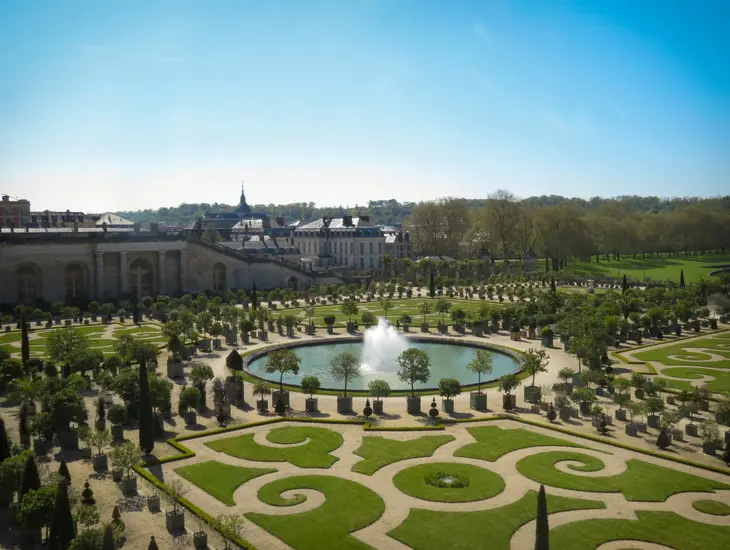
The gardens were created with the same ambition as the Palace. Formal parterres, fountains, sculptures, groves, and long perspectives extended the architecture into the landscape. This is why visitors should look beyond the rooms. The relationship between the Palace and Gardens is one of the most important parts of understanding Versailles.
Rather than rushing through every room, notice how architecture communicated status. Ask yourself who could enter each space, what purpose a room served, and how visitors would have experienced the royal environment centuries ago. Those questions turn a sightseeing trip into a much richer historical experience. Read a more comprehensive history of Versailles.
The Best Things to See at Versailles
The Palace of Versailles should naturally be your starting point, but it is only one part of the estate. Inside, you can explore royal apartments, galleries, ceremonial rooms, and the famous Hall of Mirrors. Outside, the Gardens provide an entirely different experience, with fountains, sculptures, formal flower beds, and enormous walking routes.
Beyond the Gardens lies the Estate of Trianon, including the Grand Trianon, Petit Trianon, and Queen’s Hamlet. The official Versailles ticketing system offers options that cover these different areas, while the Passport provides access to the main estate attractions and includes timed Palace entry.
Your ideal itinerary depends on how much time you have. If you only have a few hours, focus on the Palace and part of the Gardens. If you have most of a day, add Trianon. Visitors interested in gardens, architecture, history, or photography should definitely avoid rushing from one attraction to another.
The Hall of Mirrors
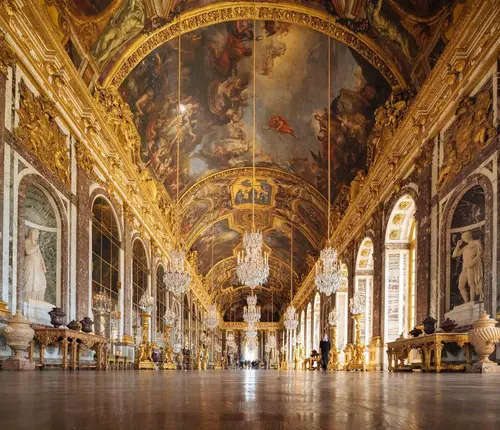
The Hall of Mirrors is probably the most famous room in Versailles. The long gallery combines mirrors, windows, chandeliers, paintings, and decorative details to create an extraordinary sense of scale. Paris tourism information notes that the gallery contains 357 mirrors, helping explain why the room has become such an enduring symbol of Versailles.
When you enter, resist the temptation to immediately take a photograph and leave. Look toward the windows and then back toward the mirrors. Notice how the gardens become part of the interior design. Look upward at the ceiling and consider how much decoration surrounds you.
The room can be crowded, especially during busy periods, so patience helps. Stand toward one end for a moment and allow the crowd to move around you. You will get a much better sense of the architecture when you stop treating the Hall of Mirrors as simply a photo opportunity.
The Royal Apartments
The royal apartments reveal another side of Versailles. These rooms were not simply luxurious living spaces. They formed part of a carefully organized world of court ceremonies and social hierarchy. Each room had a specific purpose and relationship to the rooms around it.
Take time to notice the painted ceilings, fireplaces, furniture, portraits, sculptures, and decorative details. Versailles can feel overwhelming because there is so much to look at, so you do not need to remember everything. Instead, choose a few details from each room and think about what they tell you about royal life.
The contrast between public ceremony and private life is especially interesting. Versailles was designed to make monarchy visible, and the architecture constantly reinforced that idea.
The Gardens and Grand Canal
Once you leave the Palace, the scale of Versailles changes completely. The .Gardens of Versailles extend across a huge formal landscape containing fountains, sculptures, groves, flower beds, and long perspectives. The Grand Canal provides another major landmark and offers an ideal place to slow down.
Garden admission can vary depending on the season and scheduled fountain or musical events. For 2026, the official Versailles ticket information identifies April 1 through October 31 as the high season, with separate arrangements for Musical Gardens and Musical Fountains Show days.
The Gardens also require comfortable shoes. You do not have to walk every path, but distances can quickly add up if you continue toward Trianon. Transport options are available, including the little train and electric vehicles, but walking is the best way to appreciate the estate’s enormous scale when you have enough time.
Explore the Estate of Trianon
The Estate of Trianon is one of the most interesting additions to a Versailles itinerary because the atmosphere changes dramatically after leaving the main Palace. The official Versailles visitor information recommends allowing at least 90 minutes for the Trianon area, while walking from the Palace through the Gardens and Park takes around 30 minutes.
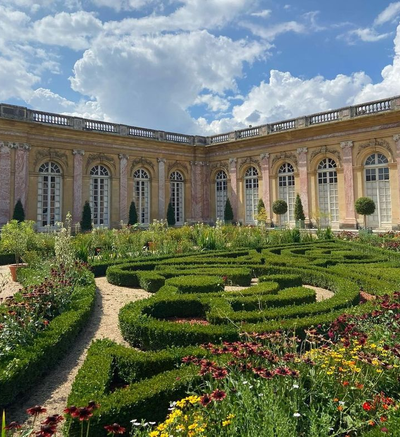
The Grand Trianon has a refined architectural style and was associated with a more private royal environment. The Petit Trianon became particularly associated with Marie-Antoinette. Nearby, the Queen’s Hamlet offers a completely different setting from the monumental Palace.
This part of Versailles helps reveal another side of royal life. Instead of enormous ceremonial spaces, you encounter smaller buildings, gardens, paths, and quieter landscapes. The change in atmosphere is one of the reasons it is worth making the extra effort to visit Trianon.
Grand Trianon and Petit Trianon
The Grand Trianon and Petit Trianon should not be considered minor attractions. They demonstrate that life at Versailles was not entirely about formal ceremonies. Members of the royal family also sought quieter environments away from the main court.
The Grand Trianon is particularly elegant, while the Petit Trianon is strongly connected with Marie-Antoinette. Visiting both gives you a useful contrast with the enormous ceremonial scale of the main Palace.
Marie-Antoinette’s Hamlet
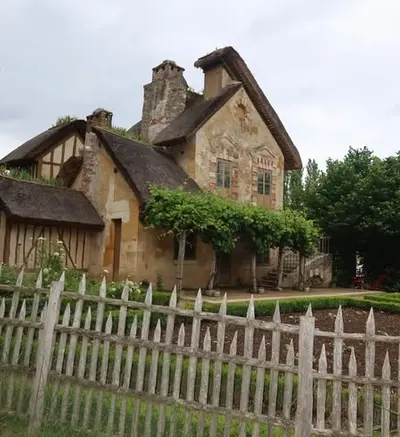
The Queen’s Hamlet, associated with Marie-Antoinette, is one of the most atmospheric places on the estate. Its small buildings and pastoral setting create a striking contrast with the formal grandeur of Versailles.
This is a place where you should slow down. The Hamlet is surrounded by greenery, paths, gardens, and smaller structures that create a very different visual experience from the Palace. It is also a good place to take a break after several hours of sightseeing.
For photographers, the Hamlet offers plenty of variety. Instead of gold-covered rooms and monumental architecture, you get greenery, water, small buildings, and softer landscapes.
How to Get to Versailles From Paris
Getting to Versailles from Paris is relatively easy. One of the most convenient options for many travelers is the RER C, traveling to Versailles Château Rive Gauche. The journey generally takes around 30 to 45 minutes depending on your departure point and service conditions. From the station, the Palace is only a short walk away.
The important thing is to check the transport situation before leaving Paris. Maintenance or service disruptions can affect journey times, and losing an hour on transportation can make a big difference when you are visiting such a large estate.
Try to arrive early enough that you are not rushing toward your timed Palace entry. A relaxed arrival gives you time to find the entrance, use the facilities, and get oriented before beginning your visit.
Best Time to Visit Versailles
The best time to visit Versailles depends on what you want from the experience. Spring and summer offer long days and the full outdoor experience, but they can also bring larger crowds and seasonal garden programming. Autumn can provide a quieter atmosphere, while winter falls within the lower-season period and can be attractive for travelers who prioritize the Palace over the full garden experience.
For 2026, the official ticketing system defines high season as April 1 through October 31 and low season as November 1 through March 31. Garden admission conditions also vary according to the season and special programming.
If your priority is photography and gardens, consider visiting earlier in the day. If your main interest is the Palace, book the earliest practical Palace entry. Whatever date you choose, check the official calendar before your trip because exhibitions, fountain shows, and seasonal schedules can change the experience.
How Long Do You Need at Versailles?
For a complete experience, plan for a full day. The official Versailles visitor guidance recommends a full day for visitors who want to see the Palace and wider estate.
A shorter visit is still possible. With three to four hours, focus on the Palace and nearby Gardens. With five or six hours, you can explore more of the Gardens and potentially Trianon. A full day gives you the freedom to explore without constantly watching the clock.
A Practical One-Day Versailles Itinerary
Start with a morning Palace entry, ideally around 9 a.m. The official visitor guidance recommends beginning with the Palace before moving into the Gardens and then toward Trianon.
Spend around two hours inside the Palace, depending on your interest and crowd conditions. Prioritize the royal apartments, Hall of Mirrors, and major galleries rather than trying to examine every object.
Late morning is a good time to enter the Gardens. Walk through the main formal areas, visit some fountains, and take a break for lunch. You do not need to cover every path.
Around noon, continue toward Trianon. Explore the Grand Trianon, Petit Trianon, and Queen’s Hamlet during the afternoon. Remember that the estate is large, so allow plenty of time for walking between locations.
Finally, return toward the main entrance and station with enough time to spare. Do not schedule your return to Paris too tightly. Versailles is much more enjoyable when you are not racing toward a train.
Tips for Visiting Versailles Without the Stress
The first important tip is to book your Palace time slot in advance. Timed entry is an important part of the current ticketing system, particularly for the Palace.
Wear comfortable shoes. This sounds obvious, but the distances between the Palace, Gardens, Trianon, and Hamlet can make Versailles surprisingly demanding on your feet.
It is also useful to prepare your phone before arriving. The official Versailles website recommends launching the visitor app in advance so that the audioguide can load properly.
Always check the official calendar shortly before your trip. Seasonal opening hours, fountain shows, musical events, and temporary exhibitions can affect your itinerary. Current information is especially important if you are planning a visit around a major event or exhibition.
Finally, do not turn your visit into a race. You do not need to see every room or walk every path. Versailles is at its best when you allow yourself time to stop, observe, and enjoy the contrast between the Palace, Gardens, and quieter Trianon estate.
Conclusion: Make the Most of Your Versailles Visit
To visit Versailles properly, look beyond the famous Palace. The Hall of Mirrors and royal apartments are essential, but the Gardens, Trianon, and Queen’s Hamlet reveal equally interesting sides of the estate.
For 2026, planning ahead is particularly useful because ticket prices and Garden admission conditions vary by season. Booking your Palace time slot, checking the official calendar, wearing comfortable shoes, and allowing enough time for transportation will make the experience much easier.
Most importantly, leave room for curiosity. Versailles is famous for its grandest rooms, but some of the most memorable moments can happen away from the obvious highlights. Walk through the Gardens, explore Trianon, spend time at the Queen’s Hamlet, and notice how dramatically the atmosphere changes. That is when Versailles becomes more than another item on a Paris sightseeing checklist. Official website of the Palace of Versailles
Frequently Asked Questions About Visiting Versailles
1. How far is Versailles from Paris?
Versailles is approximately 20 kilometers from central Paris. The RER C provides access to Versailles Château Rive Gauche, and the journey generally takes around 30 to 45 minutes depending on your departure point and current service conditions.
2. How much does it cost to visit Versailles in 2026?
The standard 2026 Passport costs €35 during high season and €25 during low season. Reduced prices are available to eligible visitors. A separate Trianon Estate ticket costs €15. Always check the official Versailles ticketing page for the latest conditions before purchasing.
3. Is one day enough for Versailles?
Yes. One day is ideal if you want to visit the Palace, Gardens, Trianon, and Queen’s Hamlet without rushing. A shorter visit can work if you concentrate mainly on the Palace and Gardens.
4. What is the best way to get to Versailles from Paris?
For many travelers, the RER C is the easiest option. Take the train to Versailles Château Rive Gauche and walk from the station to the Palace. Check the latest transportation information before traveling because service changes can occur.
5. Should I visit the Gardens and Trianon?
Yes, if your schedule allows it. The Gardens demonstrate the enormous scale of Versailles, while Trianon and the Queen’s Hamlet provide a more intimate perspective on royal life. If you have only a few hours, prioritize the Palace; if you have most of the day, explore the wider estate.