Louvre Museum: History, Interesting Facts, and Essential Visitor Tips
The Louvre Museum in Paris is one of those places that can make you stop and wonder how a single building can contain so much history. It is famous for the Mona Lisa, the glass pyramid, and its extraordinary collection of art, but the story of the Louvre goes far beyond the masterpieces hanging on its walls. Before it became a museum, it was a medieval fortress, then a royal residence, and eventually one of the world’s great public museums. In many ways, walking through the Louvre is like walking through several centuries at once.
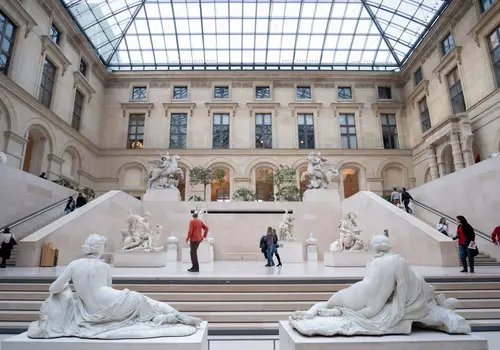
Today, the museum’s collections cover thousands of years of human creativity, from ancient civilizations to European masterpieces and decorative arts. The Louvre itself is also part of the experience: grand courtyards, monumental staircases, royal apartments, painted ceilings, sculptures, and long galleries constantly remind visitors that they are exploring a former palace. If you are planning a trip to Paris, understanding the Louvre’s history and preparing properly can make the difference between a rushed sightseeing stop and a genuinely memorable cultural experience.
A Brief History of the Louvre Museum
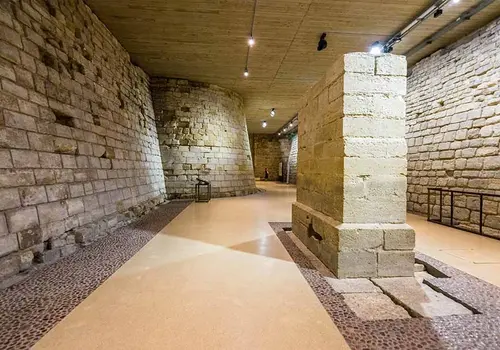
The history of the Louvre Museum begins in the late 12th century. Around 1190, King Philip II, also known as Philippe Auguste, ordered the construction of a fortified castle on the western side of medieval Paris. At that time, the Louvre was not remotely what visitors see today. It was a defensive structure designed to protect Paris, with thick walls and a large central keep. The location beside the Seine was strategically important because the river was an important route into the city. Archaeological remains of this medieval fortress can still be seen beneath the modern museum, giving visitors a fascinating glimpse into the Louvre’s earliest chapter.
From Medieval Fortress to Royal Palace
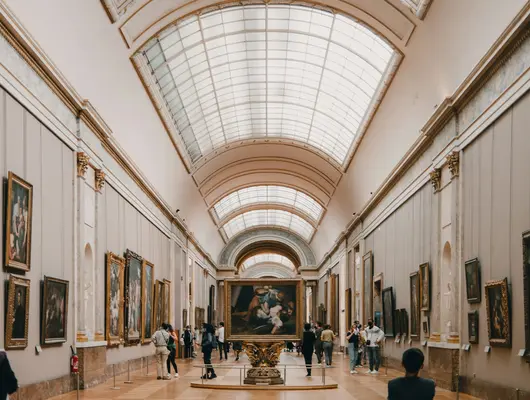
As Paris expanded, the defensive role of the fortress became less important. In the 14th century, the Louvre was transformed into a royal residence, and successive kings continued to change and enlarge it. During the Renaissance, Francis I began a major transformation, replacing much of the medieval fortress with a more sophisticated palace. Later monarchs continued the process, creating the enormous architectural complex that eventually became associated with French royal power. One particularly important development was the Grande Galerie, constructed during the reign of Henry IV between 1595 and 1610. The gallery connected different parts of the royal complex and eventually became one of the museum’s most celebrated spaces.
The Louvre Becomes a Public Museum
The most important turning point came during the French Revolution. In 1791, a decree designated the Louvre for the arts, and in 1793 the Muséum Central des Arts opened to the public. This transformed the building’s purpose. What had once been closely connected with monarchy was increasingly dedicated to preserving and displaying art for a much broader public. The museum continued expanding its collections and galleries throughout the following centuries, eventually developing into a universal museum containing objects from Europe, the Mediterranean, the Middle East, Egypt, and Asia.
This history is one reason the Louvre feels different from an ordinary art gallery. You are not simply entering a modern exhibition building filled with paintings. You are entering a former royal palace whose architecture was shaped over hundreds of years. The museum’s identity is therefore inseparable from French history. Even if you know little about art, you can still appreciate the Louvre as a living historical document, where architecture and collections tell different parts of the same story.
The Louvre Pyramid and the Grand Louvre Project
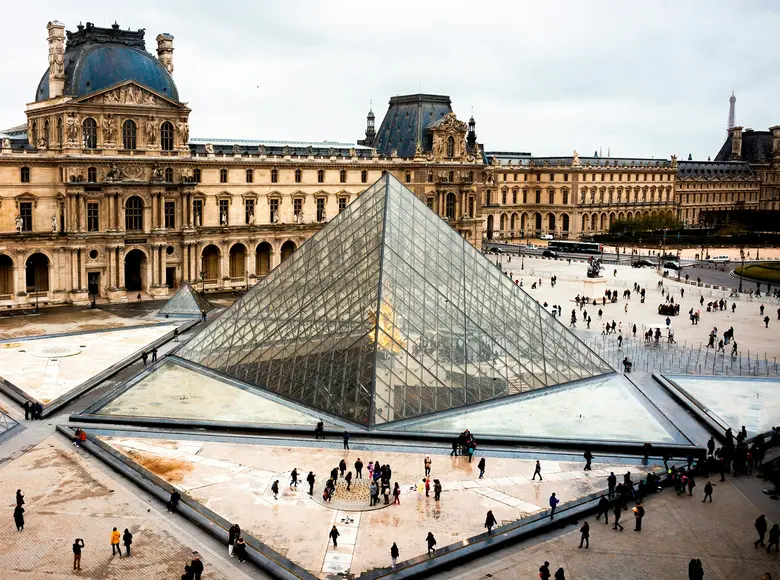
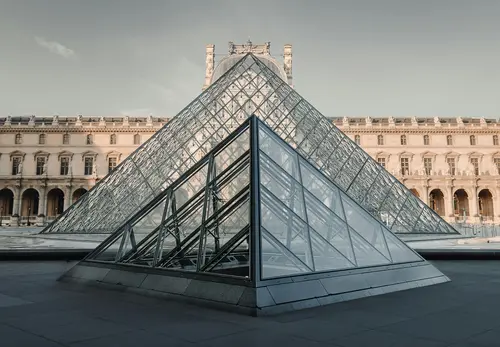
The Louvre Pyramid is probably the museum’s most recognizable modern feature. Designed by Chinese-American architect I. M. Pei, it was inaugurated in 1989 as part of the Grand Louvre project. The project was intended to modernize the museum, improve visitor circulation, and create a more efficient entrance to its enormous collection. The pyramid leads visitors into an underground lobby from which the museum’s major wings can be reached.
The pyramid was controversial when it was proposed. Some people felt that a modern glass structure had no place in the middle of a historic French palace. Yet the design was deliberately created to remain visually light and transparent, allowing the historic façades around it to remain prominent. The main pyramid is about 21 meters high and uses hundreds of glass panels. Today, the once-controversial structure has become one of the defining visual symbols of both the Louvre and Paris.
What Makes the Louvre Museum So Special?
The Louvre’s greatest strength is not simply the number of famous artworks it contains. It is the astonishing variety of civilizations, periods, materials, and artistic traditions represented under one roof. The museum’s collections include Egyptian antiquities, Near Eastern antiquities, Greek and Roman art, Islamic art, European paintings, sculptures, decorative arts, prints, and drawings. The Louvre’s online collections database alone contains information on more than 500,000 works held by the Louvre and Musée National Eugène-Delacroix.
A Museum Spanning Thousands of Years
Think of the Louvre as a giant timeline rather than a single art gallery. One room can take you into the world of ancient Egypt, while another can introduce you to Renaissance Italy, French royal life, or 19th-century European painting. That variety is part of what makes the museum exciting, but it can also be overwhelming. A first-time visitor who tries to see everything may spend hours walking without really absorbing what they are seeing. A better strategy is to choose a few periods or masterpieces that genuinely interest you and allow yourself time to explore them.
The Mona Lisa: The Louvre’s Most Famous Masterpiece
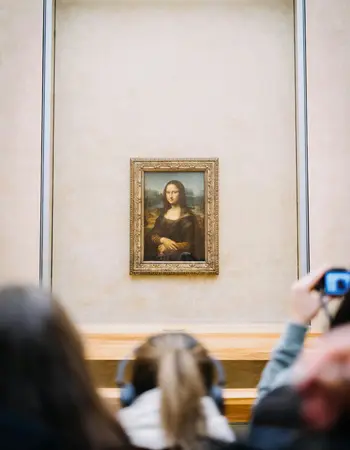
Leonardo da Vinci’s Mona Lisa is unquestionably the Louvre’s most famous artwork. Officially known as the portrait of Lisa Gherardini, wife of Francesco del Giocondo, the painting is celebrated for Leonardo’s technique, the sitter’s enigmatic expression, and the atmospheric landscape behind her. The work’s fame has grown enormously over time, and today it attracts visitors from around the world. The painting is displayed in the Denon Wing, in the Salle des États, where it is protected inside a specially controlled glass case.
The painting also has an extraordinary story. On August 21, 1911, the Mona Lisa was stolen from the Louvre. The disappearance created an international sensation, and the painting was missing for more than two years. It was eventually recovered after Vincenzo Peruggia, a former Louvre worker, attempted to sell it to an Italian art dealer. The theft helped turn an already important painting into an international celebrity.
One practical point matters when visiting: do not expect a quiet encounter with the Mona Lisa. The room can be extremely busy, and many visitors arrive specifically to see this single painting. If you want a more relaxed Louvre experience, give yourself permission to spend as much attention on the surrounding galleries as you do on the famous portrait.
Venus de Milo and Winged Victory of Samothrace
The Venus de Milo is another icon of the Louvre. The ancient Greek sculpture was discovered on the island of Melos, now known as Milos, in 1820. It was acquired by the French ambassador to Greece and presented to King Louis XVIII, who donated it to the Louvre in 1821. The missing arms have made the statue particularly mysterious because its original pose remains uncertain.
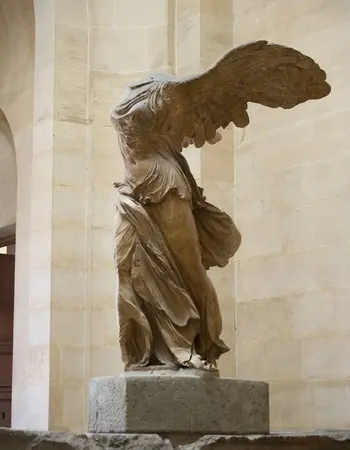
The Winged Victory of Samothrace offers a completely different experience. The monumental ancient Greek sculpture represents Nike, the goddess of victory, and is dramatically positioned above the Daru staircase. The combination of the figure’s wings, flowing drapery, and ship-shaped base creates an extraordinary sense of movement. The sculpture was assembled from fragments and underwent major restoration, eventually becoming one of the Louvre’s most recognizable works.
Other Must-See Works at the Louvre
Beyond the three famous attractions, the Louvre contains countless works that deserve attention. Liberty Leading the People by Eugène Delacroix is one of the best-known French paintings, while Jacques-Louis David’s The Coronation of Napoleon offers a spectacular glimpse into the visual language of imperial France. Visitors interested in ancient history can explore Egyptian, Greek, Roman, and Near Eastern collections, while architecture enthusiasts can spend considerable time simply studying the palace itself.
One useful way to explore the museum is to think in themes rather than simply chasing famous names. You might follow the development of portraiture, explore representations of mythology, focus on royal life, or compare artistic traditions from different civilizations. This approach can turn the Louvre from a checklist of famous objects into a connected story.
Fascinating Facts About the Louvre Museum
The Louvre is full of unusual details. Its history stretches back around eight centuries, and the building has repeatedly been enlarged, remodeled, and repurposed. The modern pyramid is actually not the only pyramid associated with the complex: the Louvre also contains smaller pyramid structures and an inverted pyramid in the underground Carrousel area. The main pyramid itself has become so closely associated with the museum that it is now almost impossible to imagine the Louvre without it.
Another fascinating fact is that the Louvre was not created from a single architectural plan. Instead, it developed layer by layer as different rulers, architects, and governments changed the complex. That explains why a visit can feel like moving through different architectural worlds. The museum’s collection is similarly diverse, reflecting centuries of collecting, archaeology, royal patronage, political upheaval, conservation, and cultural exchange.
How Big Is the Louvre Museum?
The Louvre is enormous, and its size is one of the first things that surprises visitors. The museum’s collections encompass thousands of years of art history, and its enormous palace complex contains multiple wings and departments. The museum itself says its palace and collections cover nearly 10,000 years of art history, while its collections database provides information on more than 500,000 works.
This scale has an important practical consequence: you cannot realistically see everything during one visit. Even spending an entire day inside will only give you a sample of what the museum offers. Instead of treating that as a problem, think of the Louvre as a place you can return to. A first visit can focus on the essential highlights, while future visits can explore particular departments in much greater depth.
Louvre Museum Opening Hours and Current Ticket Prices
The Louvre’s current official visitor information states that the museum is closed on Tuesdays. Its regular hours are currently 9:00 AM to 6:00 PM on Monday, Thursday, Saturday, and Sunday, with extended hours from 9:00 AM to 9:00 PM on Wednesday and Friday. Last entry is one hour before closing, and visitors are asked to leave exhibition rooms 30 minutes before closing.
As of the rates applicable from January 14, 2026, the official Louvre website lists admission at €22 for EEA visitors and €32 for non-EEA visitors. Several categories can enter free, including visitors under 18 and certain EEA residents or citizens under 26, subject to the museum’s conditions. The Louvre also states that time-slot reservations are recommended, including for visitors eligible for free admission.
Because opening hours, prices, gallery availability, and special arrangements can change, check the official Louvre website shortly before your trip rather than relying on an old travel article.
Should You Buy Louvre Tickets in Advance?
For most travelers, planning ahead makes sense. The Louvre says time-slot bookings are recommended, and tickets purchased online are associated with the selected date and time. The museum also warns visitors about fraudulent mirror websites, unofficial ticket sellers, and misleading claims about queue-jumping tickets.
The safest approach is to use the official Louvre ticketing system and keep your confirmation accessible on your phone. If you qualify for free admission, do not assume that you can simply arrive without planning; the museum specifically recommends time-slot reservations for free-admission visitors as well. Also remember that tickets are generally tied to the chosen date and time and are not freely changeable, so check your schedule carefully before completing the purchase.
Which Louvre Entrance Should You Use?
The Pyramid is the main entrance to the Louvre and is the entrance most visitors associate with the museum. Depending on current conditions, the Carrousel and Porte des Lions entrances may also be available to eligible visitors. Groups and membership card holders have specific entrance arrangements.
Do not assume that every entrance works for every ticket or visitor category. Before you leave for the museum, check the latest official entrance information and allow extra time for security procedures. A few minutes of preparation can save you from standing in the wrong queue.
How Much Time Do You Need at the Louvre?
There is no single perfect amount of time. If you have only a few hours in Paris, a focused two- or three-hour visit can still be worthwhile. If you have half a day, you can combine major masterpieces with one or two departments that interest you. Art lovers and history enthusiasts may easily spend much longer.
The important thing is to avoid the temptation to rush. The Louvre is not a museum that rewards speed. It is more like a huge library: you cannot read every book in one afternoon, but you can choose a few chapters that leave a lasting impression.
What Should You See on Your First Visit?
For a first visit, many travelers naturally want to see the Mona Lisa, Venus de Milo, and Winged Victory of Samothrace. Those are excellent starting points, but they should not become the entire itinerary. Consider adding one or two collections that match your interests, whether that means Egyptian antiquities, French painting, Greek and Roman sculpture, Islamic art, or decorative arts.
It is also worth leaving some room for discovery. Some of the most memorable moments can happen when you turn into a gallery that was not on your original list. The Louvre is so large that unexpected discoveries are almost guaranteed.
Practical Tips for a Comfortable Louvre Visit
Wear comfortable shoes because you will probably walk much farther than you expect. Carry only what you genuinely need, especially if you are planning to spend several hours inside. Give yourself extra time for security and navigation, and consider taking a short break if the museum begins to feel overwhelming.
It is also smart to download or review the museum map before your visit. The Louvre has multiple wings and levels, and its scale can make navigation confusing for first-time visitors. If a particular artwork is important to you, check its current location before arriving because galleries can occasionally close or change.
Visiting the Louvre With Children
The Louvre can be surprisingly interesting for children if you approach it as an adventure rather than a school assignment. Instead of trying to see hundreds of paintings, choose a few objects with strong stories: ancient Egyptian figures, monumental sculptures, royal rooms, or the mysterious Mona Lisa. Children often respond better to questions and stories than to long explanations about artistic movements.
Families should also check the current visitor information before arriving. The Louvre states that prams are permitted, although very large models may not fit certain lifts, and front-worn baby carriers are allowed. The museum also provides family-oriented visitor information and amenities that can make planning easier.
What to Know About Photography, Bags, and Security
Before entering, expect security procedures and follow the museum’s current instructions. Photography policies can vary by location or exhibition, so look for signs and follow staff guidance rather than assuming that the same rules apply everywhere. Avoid bringing unnecessary items, since a lighter bag generally makes a long museum visit more comfortable.
Most importantly, keep your ticket and identification documents available if your admission category requires proof. If you have purchased a reduced-price or free ticket based on age, residency, citizenship, disability, or another qualification, make sure you have the required supporting documents with you.
How to Combine the Louvre With Other Paris Attractions
The Louvre’s central location makes it easy to build a full day around the museum. After your visit, you can walk through the Tuileries Garden, continue toward the Seine, explore the area around Place de la Concorde, or connect your itinerary with other central Paris landmarks. The gardens are historically connected to the Louvre estate and provide a welcome change of pace after several hours indoors.
One practical strategy is to avoid scheduling too many major attractions immediately before the Louvre. You will probably be tired after several hours inside the museum, so pairing it with a relaxed walk and a café or garden visit can create a more enjoyable day. Paris is best experienced as a sequence of neighborhoods and experiences rather than a race from one landmark to another.
Conclusion
The Louvre Museum is extraordinary because it is simultaneously a museum, a former royal palace, an architectural masterpiece, and a record of centuries of French and world history. From its origins as a medieval fortress in 1190 to its opening as a public museum in 1793 and the addition of I. M. Pei’s famous pyramid in 1989, the Louvre has continually reinvented itself while preserving traces of its past.
For visitors, preparation is the key to enjoying such a huge institution. Check the current opening hours and ticket prices, reserve a time slot when appropriate, use the correct entrance, wear comfortable shoes, and decide which artworks or collections matter most to you. Most importantly, do not try to conquer the entire Louvre in one day. Choose a few highlights, slow down, look carefully, and leave some time for the unexpected. That is when the Louvre stops feeling like a tourist checklist and starts feeling like an extraordinary journey through human history. For official information, you can visit the museum’s website at https://www.louvre.fr/.
Frequently Asked Questions About the Louvre Museum
1. How old is the Louvre Museum?
The Louvre’s history as a building begins around 1190, when Philip II ordered a fortified castle to be constructed. It became a royal residence in 1364, while the public museum opened in 1793. In other words, the Louvre has a much longer history than its identity as an art museum alone.
2. How much are Louvre Museum tickets in 2026?
The Louvre’s current published rates are €22 for EEA visitors and €32 for non-EEA visitors, with free admission available to several qualifying categories. Because prices and eligibility rules can change, visitors should verify the current official information before purchasing.
3. Is the Louvre closed on Tuesday?
Yes. According to the Louvre’s current official visitor information, the museum is closed every Tuesday. The museum also closes on certain public holidays, including January 1, May 1, and December 25.
4. How long should I spend at the Louvre?
For a first visit, a few focused hours can provide a good introduction, while a half-day visit gives you more time to explore. Trying to see the entire museum in one day is unrealistic because of its enormous size. A focused itinerary is usually more enjoyable than rushing through dozens of galleries.
5. What are the three most famous works at the Louvre?
Three of the museum’s most iconic works are generally considered the Mona Lisa, Venus de Milo, and Winged Victory of Samothrace. Each represents a completely different period and artistic tradition, which makes seeing all three particularly rewarding during a first visit.